

Built from a Need for Better Code Study
Works on all devices



30-days refund guarantee
PHP Courses Arranged by Learning Stage
-
Align Framework
Regular price €204,00 EURRegular price -
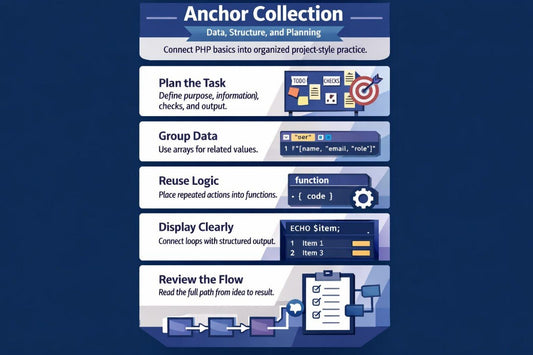
Anchor Collection
Regular price €193,00 EURRegular price -
Flow Stage
Regular price €175,00 EURRegular price -
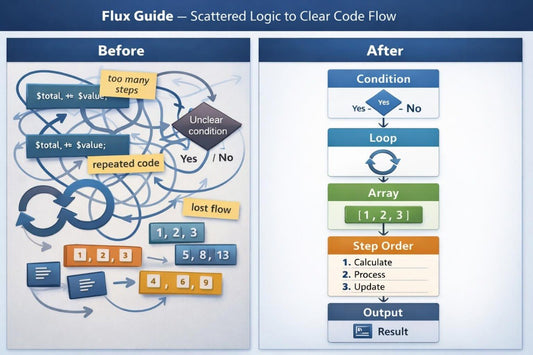
Flux Guide
Regular price €57,00 EURRegular price -
Halo Module
Regular price €119,00 EURRegular price -
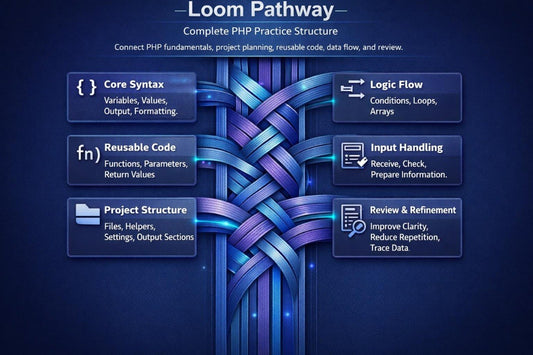
Loom Pathway
Regular price €487,00 EURRegular price -
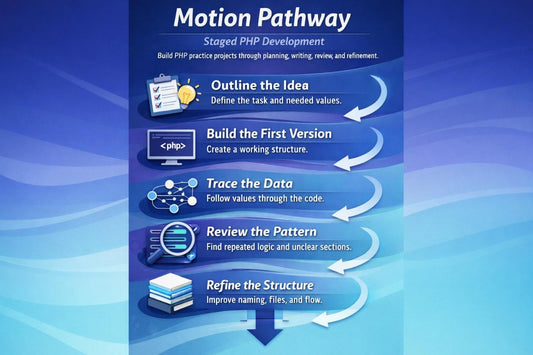
Motion Pathway
Regular price €249,00 EURRegular price








Code Learning with a Clear Inner Structure
Learning Journeys Shaped by Practice
-

Nate Fischer
Nate came to Phpcorvialir after trying to study PHP from scattered notes and short code examples that did not clearly connect. He understood a few basic terms, but variables, conditions, and functions still felt separated from each other. The structured order of the materials helped him see how each PHP concept fits into a wider learning path.
“The course helped me slow down and read the code with more attention to each step.” -

Oona Stankovic
Oona came to Phpcorvialir after working through several PHP examples that felt disconnected. She wanted to understand how functions, arrays, input checks, and file organization could work together in project-style practice. The course format was useful because it connected smaller topics into a broader structure.
“The most helpful part was seeing how separate PHP skills can become one organized workflow.” -

Clara Alban
Clara had some experience editing small PHP snippets, but she wanted a clearer way to understand input handling, reusable functions, and organized project files. She found the module format useful because each section focused on one topic before moving into the next. The examples helped her compare crowded code with cleaner structure.
“I liked that the materials explained why the code was arranged a certain way, not only what to type.”


Start with a Free PHP Learning Resource
What This Learning Path Helps You Build
-

Clear Structure
Each course is arranged in a logical order so learners can study PHP topics without jumping between scattered materials.
-

Practical Examples
The materials include code examples and tasks that show how PHP concepts work inside realistic learning situations.
-

Organized Practice
Learners study syntax, logic, functions, input handling, and project structure through organized and connected modules.
-

Review Habits
The course approach encourages learners to read, check, and improve PHP code with more attention to structure.


Preview the Phpcorvialir Learning Path
A Team Focused on Clear Technical Learning
-

Leon Nilsson
PHP Syntax Reviewer
Leon reviews PHP examples for clear structure, readable formatting, and correct syntax order. His work focuses on helping course materials present code in a way that learners can follow step by step. He checks variables, conditions, loops, and function examples for clarity
-

Lucia Ragnar
PHP Module Structure Writer
Lucia writes PHP learning modules focused on organized explanations and practical code examples. She works with topics such as syntax, variables, functions, arrays, and input handling. Her materials are arranged to support steady learning through clear sections.
-

Mateo Duval
PHP File Organization Developer
Mateo works on PHP examples that show how files, helper sections, and shared settings can be arranged. He creates learning layouts where input, logic, and output are separated into clearer parts. His work supports organized project-style practice.


